Resources
Materials & finish Options
This section explains the metals we cast—cast iron, bronze, and aluminum—how each material performs over time, and which finish options are available. Use it as a reference when selecting the right balance of appearance, durability, and lifespan for your project.
How Do I Know Which Material to Specify?
Choosing the right material depends on environment, performance requirements, appearance goals, and budget.

Cast iron is extremely durable, low maintenance, and the most cost-effective option. When first installed, it passes through a temporary orange oxidation phase, which can either weather naturally or be bypassed with a finish option. Over time, cast iron develops a stable, protective patina and will last for decades.
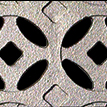
Cast bronze is strong, durable, and ideal for use near salt water or fountains. It does not rust, but it is significantly more expensive than cast iron. Bronze weathers naturally and develops character over time depending on exposure and foot traffic.
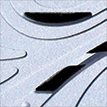
Cast aluminum is often specified when a lighter-weight casting is required or when the look of stainless steel is desired. Aluminum weathers to a dull pewter finish and is typically priced between cast iron and bronze.
Cast Iron Oxidation – A.K.A. “Rust”
Why are my grates turning orange?
Raw cast iron starts out grey, but when exposed to moisture it develops a bright orange oxide layer. This initial oxidation—often referred to as rust—is a normal and temporary phase.
Over time, the loose surface oxidation wears away and is replaced by a tightly adhering oxide layer that protects the metal. The result is a stable, rich brown patina similar to traditional manhole covers.
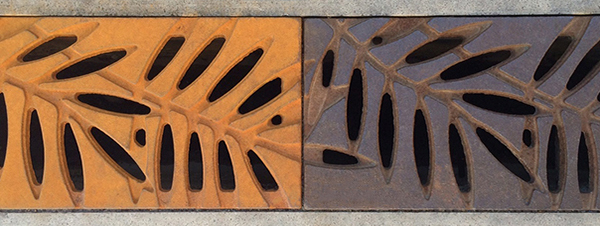
Locust cast iron grates at 2 weeks (left) and 2 years (right) after installation.
How long will my grates stay orange?
The oxidation process typically lasts anywhere from a few months to about a year, depending on environmental exposure. Increased foot traffic and weather accelerate the process.
Will the grates rust away to over time?
No. Cast iron has been used for centuries in demanding applications that require strength and durability. Even when left raw, cast iron grates will last for decades.
Will rust stain surrounding surfaces?
When installed in pre-formed drain bodies or Iron Age custom frames, rust staining is not a concern. Drain bodies and frames include non-iron edges that prevent direct contact with surrounding materials, allowing oxidation particles to wash safely into the drain system.
What if I don’t want orange grates—even temporarily?
While we generally recommend allowing cast iron to age naturally, we offer a Baked-On-Oil Finish for projects that wish to bypass the bright orange phase. This finish provides a smoother transition from installation to final patina.
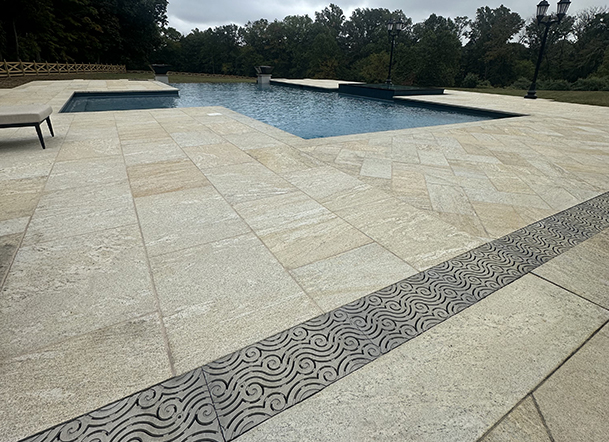
Aluminum trench grates provide a refined, corrosion-resistant solution for poolside installations.
Is cast iron suitable near pools?
Cast iron performs well in most exterior environments, but pool conditions can introduce variables that accelerate corrosion—particularly when grates are exposed to chemically treated water or frequent splash-out.
In residential settings where grates are set back from the water’s edge and not routinely exposed to chlorinated or salt-treated water, cast iron may perform well over time. However, in high-use environments—or where grates are located close to the pool perimeter—corrosion can occur more quickly.
For projects located immediately adjacent to pools, or where long-term corrosion resistance is a primary concern, we generally recommend cast bronze or marine-grade aluminum (535 alloy) as more reliable options.
If you’d like to review the specifics of your installation, we’re always happy to discuss the best material choice for your project conditions
Material — Cast Iron
Cast iron is the most commonly specified material for our grates due to its exceptional durability, long service life, and cost efficiency. When left raw, it weathers naturally and develops a stable, protective patina over time.

Grey Iron (ASTM Class 25, 30, 35B)
Grey iron is the most widely used iron alloy worldwide and is the material used for the majority of our larger tree grates and catch basin grates. It offers excellent compressive strength and density at the most economical price point, making it ideal for robust, thick-section castings.

Ductile Iron (ASTM A536 Grade 65-45-12)
Ductile iron is grey iron modified with magnesium, which alters the graphite structure and dramatically increases flexibility and tensile strength. This allows for thinner, lighter castings with a reduced risk of cracking or breakage while still meeting demanding load requirements.
How to Specify Cast Iron
Rather than specifying an iron alloy directly, we recommend specifying the required load rating for the application. Load Class requirements determine the appropriate material selection.
| Load Class | Capacity | Application |
|---|---|---|
| Load Class A | 3,372# – 15kN | Residential & light pedestrian traffic |
| Load Class B | 28,100# – 125kN | Sidewalks & small private parking lots |
| Load Class C | 56,200# – 250kN | Parking lots & general commercial areas |
| Load Class D | 89,920# – 400kN | Trafficked sections of roads & highways |
| Load Class E | 134,800# – 600kN | Industrial areas, gas stations & light commercial forklifts |
| Load Class F | 202,320# – 900kN | Aircraft runways, docks, heavy wheel loads |
Cast iron has been used for centuries in applications requiring exceptional durability and resistance to wear. When properly specified and installed, iron grates will perform reliably for decades.
Material — Cast Bronze
Bronze is a strong, durable material that casts beautifully and performs exceptionally well in corrosive environments such as coastal areas, fountains, and water features. Because bronze alloys are high in copper content, they weather naturally over time, developing rich surface character.

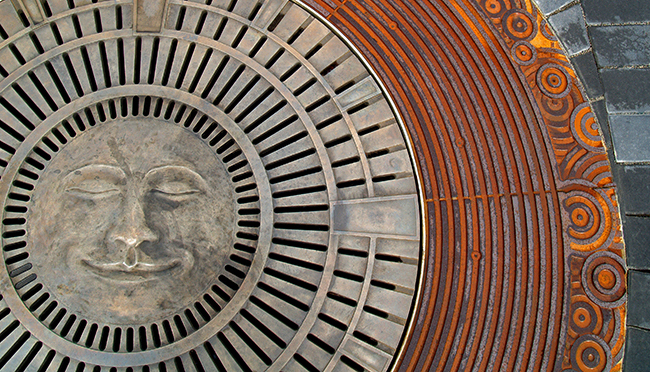
Silicon Bronze (Alloy C87500)
Gold in color when raw, silicon bronze ages much like copper, gradually deepening in tone with exposure. It is the most commonly used bronze alloy in our castings and offers an excellent balance of strength, durability, and visual warmth.
Nickel Bronze (Alloy C99700)
Nickel bronze has similar strength and performance characteristics to silicon bronze, but with a lighter, more “white gold” appearance when raw. As it weathers, it develops softer, lighter highlights while retaining the same long-term durability.
How Bronze Weathers Over Time
Bronze alloys respond to both environment and use:
- In low-traffic areas, bronze may develop verdigris, especially in humid or coastal conditions
- In areas with regular foot traffic, the surface becomes naturally burnished, creating contrast between recessed and raised areas
- The specific alloy influences the tone of the highlights, with silicon bronze reading warmer and nickel bronze appearing cooler
Bronze does not rust, making it a preferred material where long-term corrosion resistance and visual richness are key design considerations.

Material — Cast Aluminum
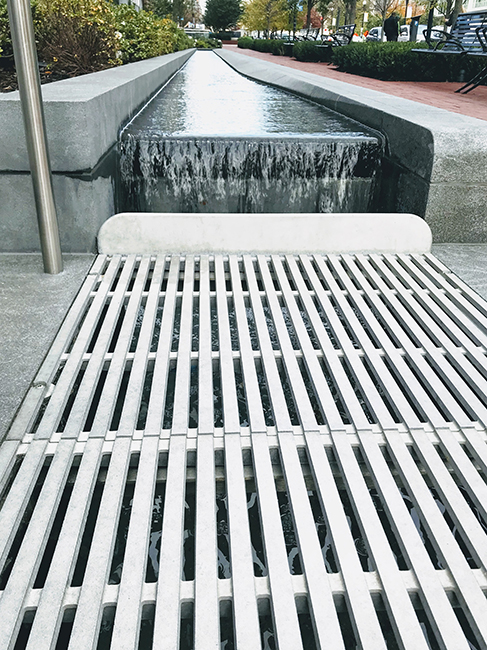
Cast aluminum is a strong, lightweight alternative to iron and bronze, often specified when reduced weight, corrosion resistance, or a stainless-steel-like appearance is desired. Raw aluminum is silver in color and weathers naturally to a soft pewter finish.
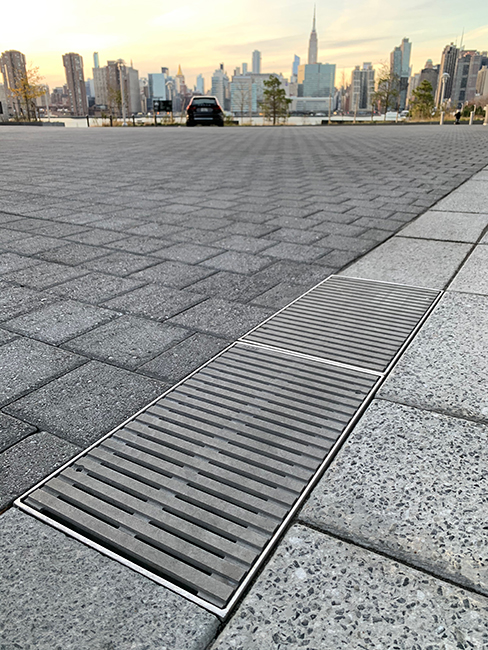
Cast Aluminum — A356 Alloy (T6 Heat-Treated)
A356 aluminum can be heat-treated to T6 hardness, significantly increasing its strength. When properly engineered, it can meet heavy load requirements up to H-20, making it suitable for demanding applications where lighter weight is still a priority.
Cast Aluminum — 535 Alloy (“Almag”)
535 aluminum offers excellent corrosion resistance and is particularly well suited for use around pools, fountains, salt water, and marine environments. It is often selected for applications where long-term exposure to moisture or chemicals is expected.
Why Specify Aluminum
- High strength-to-weight ratio
- Easier handling for large grates or removable site furnishings
- Excellent corrosion resistance
- Compatible with surface treatments such as anodizing for added protection
Because aluminum alloys vary significantly in performance, selecting the proper alloy for the environment and load conditions is critical.
Contact us—we’re always happy to review project specifics and recommend the best option.
Finish — Baked-On-Oil
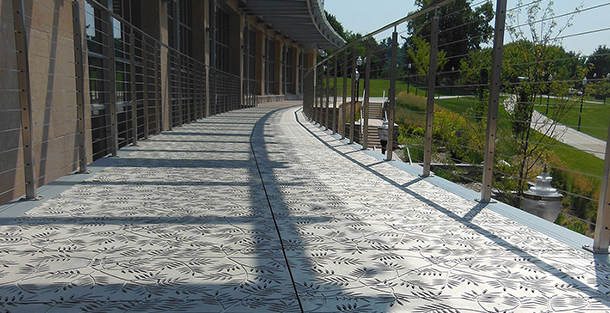
Our Baked-On-Oil Finish is a full-immersion treatment for iron castings using recycled vegetable oil. Its primary purpose is aesthetic—creating the appearance of naturally aged iron while providing a smooth transition to the final patina.
Baked-On-Oil Finish — Process Overview
Surface Preparation
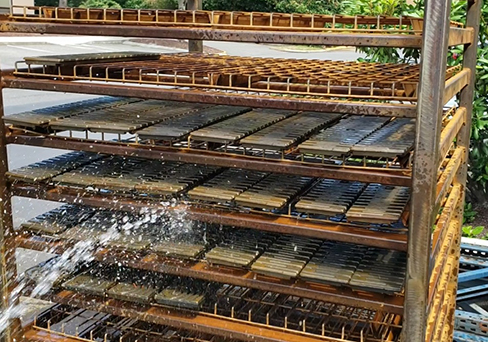
Castings are arranged in single layers and repeatedly sprayed with water, then allowed to dry. This process is repeated until a uniform surface oxidation develops, creating the ideal base for the oil application.

Oil Application
A 100% recycled vegetable oil is applied using a full-immersion process to ensure complete, even coverage across the entire casting, including recessed and hard-to-reach areas.
Baking
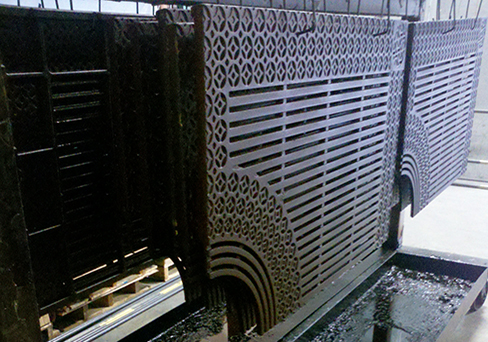
The oiled castings are baked at a minimum of 430°F until the oil polymerizes and becomes dry to the touch. This step locks in the finish and produces a surface that closely resembles naturally aged iron.
Why Specify a Baked-On-Oil Finish
- Creates the look of naturally aged iron at installation
- Provides a smoother visual transition as the finish wears into its final patina
- Dry to the touch with slip resistance equal to or greater than painted or powder-coated finishes
- Contains no VOCs or harmful chemicals
- Uses recycled cooking oil, with excess oil captured and reused as part of the process
Lead Time:
Adding a Baked-On-Oil Finish typically requires an additional 10-14 days.

Finish — Powder Coat
Powder coating is a durable, factory-applied finish that provides a smooth, consistent surface and strong resistance to chipping, scratching, fading, and wear. The finish is applied as a dry powder using an electrostatic charge, then baked to fuse the coating to the metal.
While powder coat offers excellent performance in many applications, its suitability depends on how and where the product will be installed.

Ground Plane Applications – Not recommended
(Tree grates, trench grates, covers, plaques, and other walkable surfaces)
For steel or cast iron products installed in the ground plane, raw metal is generally recommended. Foot traffic will eventually wear through painted or powder-coated surfaces, allowing corrosion to develop unevenly in high-traffic areas (see above tree grate image).
Powder coating may also reduce slip resistance on walkable surfaces.
If the primary goal is to avoid the temporary orange oxidation phase of cast iron, a Baked-On-Oil Finish is typically a better alternative.
Vertical Plane Applications – Recommended
(Fences, panels, bollards, plaques, and other non-walkable elements)
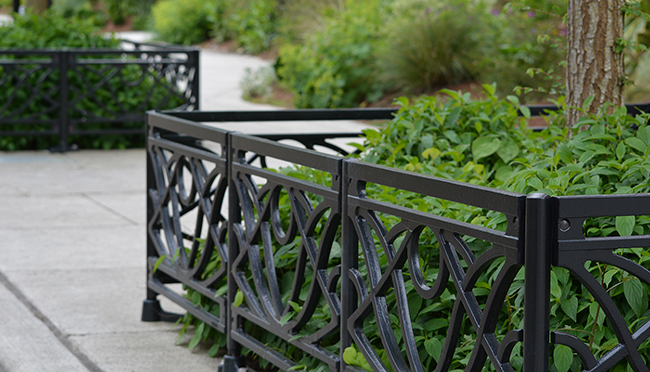
Powder coating is well suited for steel or cast iron products installed in the vertical plane, where wear from traffic is minimal. In these applications, powder coat helps prevent bleed onto adjacent materials and provides long-lasting color stability.
Aluminum and bronze products can often be left raw in vertical applications, as these alloys do not typically bleed onto surrounding surfaces.
Iron Age Designs Standard Powder Coat Colors

Cardinal®
Black 20 Gloss — BK08

Cardinal®
Bronze 40 Gloss — BR23

Cardinal®
Traffic Green 70 Gloss — GN16
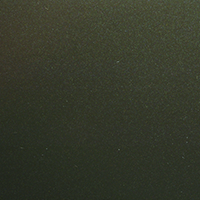
Cardinal®
Bronze 50 Gloss — BR01
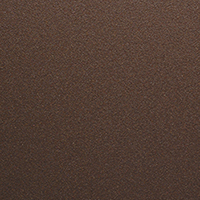
Cardinal®
Special Rust Texture — BR47

Cardinal®
Black Texture — BK59
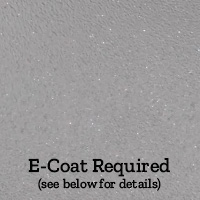
Tiger Drylac®
Fine Texture Glimmer — DB702
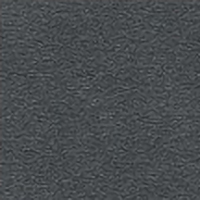
Tiger Drylac®
Fine Texture Glimmer — US2
Light Powder Coat Colors on Cast Iron —E-Coat Required
When light powder coat colors are specified for cast iron, we recommend using an E-Coat primer prior to powder coating. This full-immersion process ensures complete coverage—especially in recessed or hard-to-reach areas—and reduces the risk of rust bleed-through over time.
Why Specify Powder Coat
- Provides a durable, uniform finish with long-term color stability
- Ideal for vertical applications where wear is minimal
- Helps prevent bleed from steel or iron onto surrounding materials
- Wide range of standard and custom color options available
Lead Time:
Adding E-Coat and/or powder coat typically requires an additional 10-14 days.